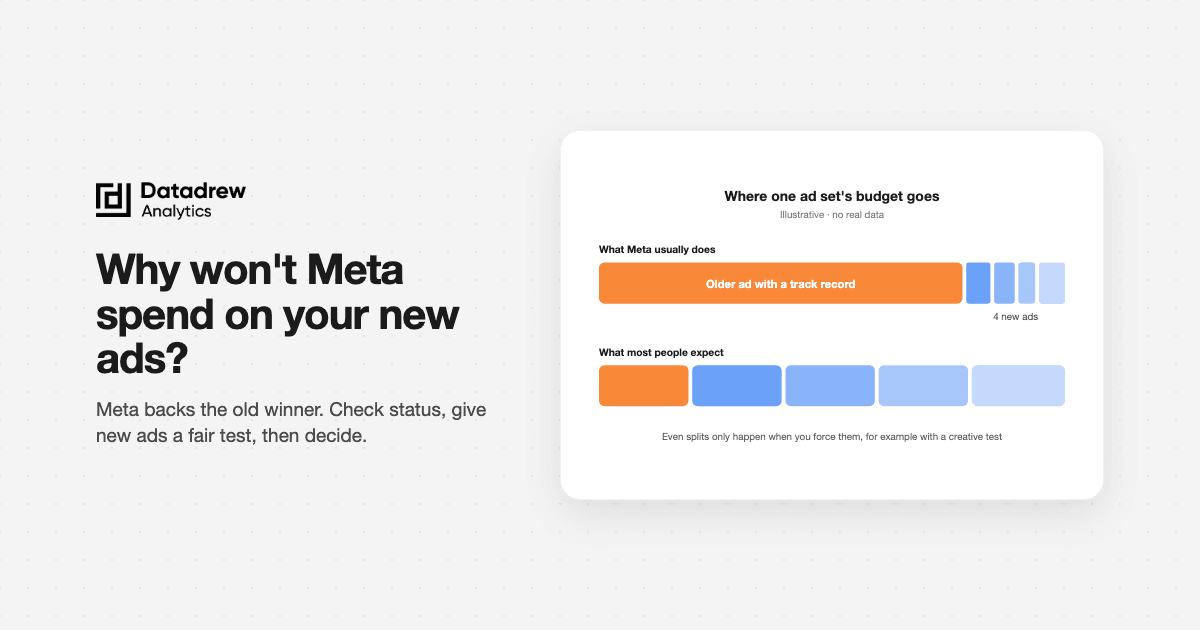
When Meta won't spend on your new ads, it's usually a choice, not a bug. Inside an ad set, Meta puts most of the budget behind the ad it expects to win, and that's usually an older ad with a track record. Your new ads get scraps. Before you pause anything, check three things: is the ad actually live, has it had a fair test, and how many ads are fighting for one budget.
The evidence below comes from Drew, DataDrew's AI agent for Shopify. An agency asked Drew the same question several times in one month: "We're launching a lot of new ads. Are they getting spend, and are they working?" The brand isn't named, and every figure is rounded. Worked examples use invented round numbers.
TL;DR
- "Not spending" is usually "losing the budget fight." In most ad sets we looked at, one ad took between about two-thirds and nine-tenths of the spend.
- Check status first. In one month, about 4 in 10 new ads at one brand never delivered. Every one of them was paused or sat inside a paused ad set.
- Set a fair-test bar. A simple one: about 2x your target cost per purchase in spend. Don't judge an ad that hasn't reached it.
- Do the fair-test math. Budget ÷ number of ads ÷ how unevenly Meta splits it = how many days a new ad needs. Six ads on a small budget can take two weeks or more.
- Move creative, not budget. Duplicate a proven or promising ad into the ad set that needs it. Switch off the old copy only after the new one has delivered for a few days.
- Use a creative test when you want a forced, even split. Meta's built-in creative testing does this for two to five ads.
Why won't Meta spend on my new ads?
Meta's delivery system decides which ads in an ad set get shown. It doesn't split the budget evenly. It backs the ad it predicts will get you the most results at the lowest cost.
An older ad has thousands of impressions and a record of purchases. A new ad has nothing. So Meta keeps backing the older ad, and the new one gets a small test slice, or none. Jon Loomer, who has written about this a lot, saw Meta put almost all of an ad set's budget on one ad while ignoring the rest.
This isn't always wrong. Sometimes Meta has early signals, like a weak first few seconds or a low click rate, and it's right to hold back. The problem is that you can't tell "Meta knows best" from "Meta never gave it a chance" by looking at the spend column alone.
What did one brand's agency find?
The agency ran one Shopify brand and launched new ads every week. It asked Drew two questions in a week: are the new ads getting spend, and which ads should move to which ad set because they aren't getting enough budget?
Here's what Drew found, rounded:
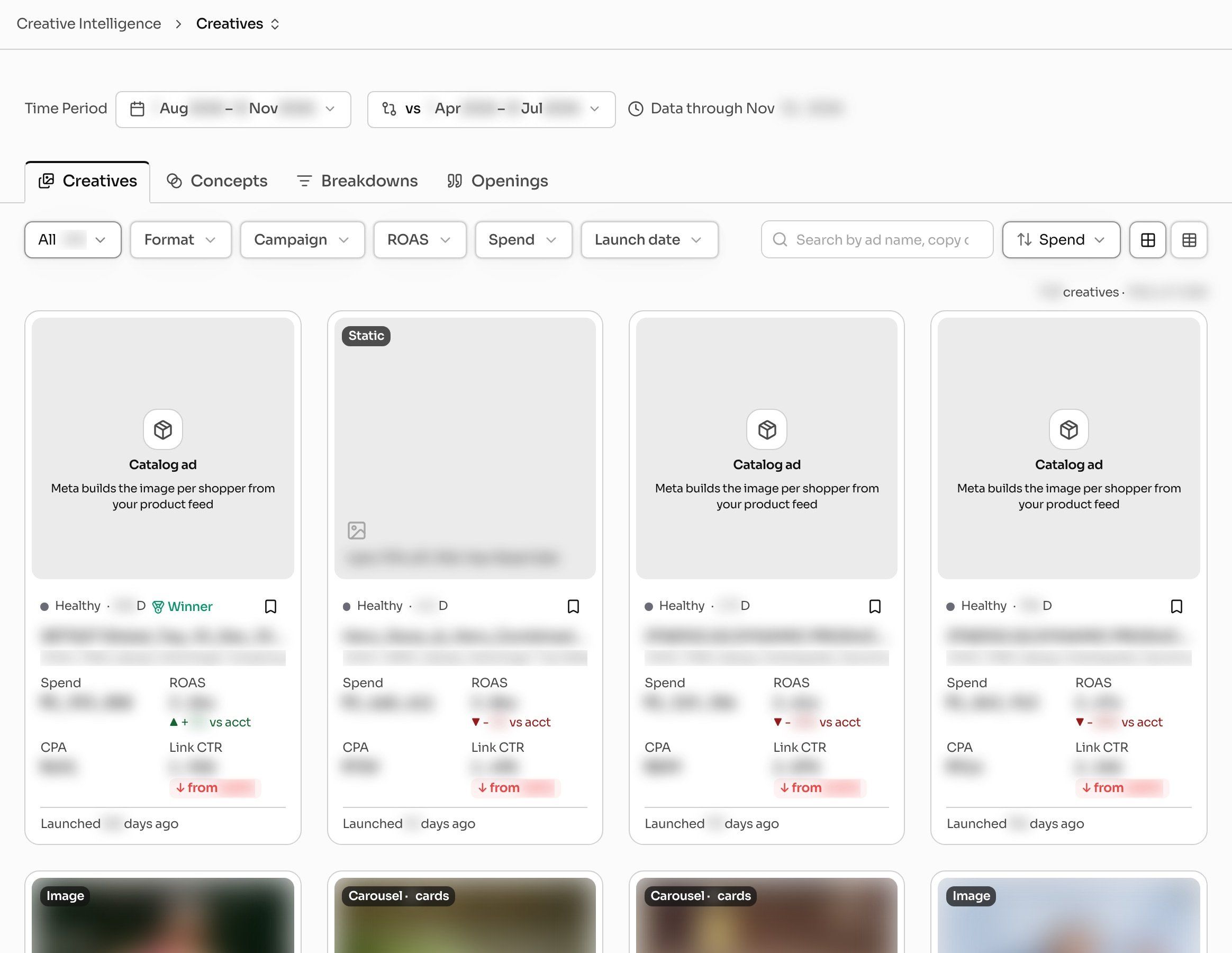
- About 4 in 10 new ads from the last month never delivered at all. That sounds like a delivery problem. But every one of them was paused, or sat inside an ad set that was paused.
- Almost every ad launched in the last two weeks got at least some spend. The "new ads aren't spending" worry was mostly about old, switched-off ads.
- New ads took about half the account's spend. And they performed about the same as older ads, on Meta-reported numbers.
- The real issue was concentration. In the three biggest ad sets, one ad took between about two-thirds and nine-tenths of the spend.
- About 6 in 10 active ads hadn't reached a fair test. Drew set the bar at about 2x the account's cost per purchase.
- The same creative ran in up to five ad sets at once. It was competing with itself in the same auctions.
- One testing ad set had six ads on a small budget. At that rate, each ad would need over two weeks to reach a fair test.
The useful lesson: "Is it spending?" is the wrong question. The right one is "Has it had enough spend to judge?"
What should you check first?
Work down this table. Most "not spending" problems are caught in the first four rows.
| Check | Where to look | What it means | What to do |
|---|---|---|---|
| Is the ad, ad set and campaign on? | Delivery column in Ads Manager | A paused parent stops every ad under it | Switch on the right level, or archive ads you don't want |
| Is it still in review, or rejected? | Delivery column, ad status | New ads can't run until approved. Meta says most reviews finish within 24 hours (Meta help) | Wait, or fix and resubmit a rejected ad |
| Any spending limit, bid cap or cost cap? | Account settings, ad set bid strategy | A cap below what the auction needs stops delivery | Raise or remove the cap, or test on Highest Volume |
| How much has it actually spent? | Ad-level spend vs your fair-test bar | Under the bar = untested, not failed | Don't judge it yet |
| What share of the ad set does it get? | Ad-level spend ÷ ad set spend | One ad over about 60% means new ads are starved | Cut ad count, or run a creative test |
| How many ads share one budget? | Ads per ad set ÷ daily budget | Too many ads = no ad reaches the bar in a week | Keep 3–4 ads in a testing ad set |
| Is the same creative in several ad sets? | Ad names / creative IDs across ad sets | Copies compete with each other and split data | Give each creative one home in testing |
| Is the ad set in learning or "Learning limited"? | Delivery column | Not enough results for Meta to settle | Fewer ad sets, more budget each |
| Does an Advantage+ budget favour one ad set? | Ad set spend inside the campaign | The new ad's whole ad set may be losing the split | Check ad set spend before blaming the ad |
How much spend counts as a fair test?
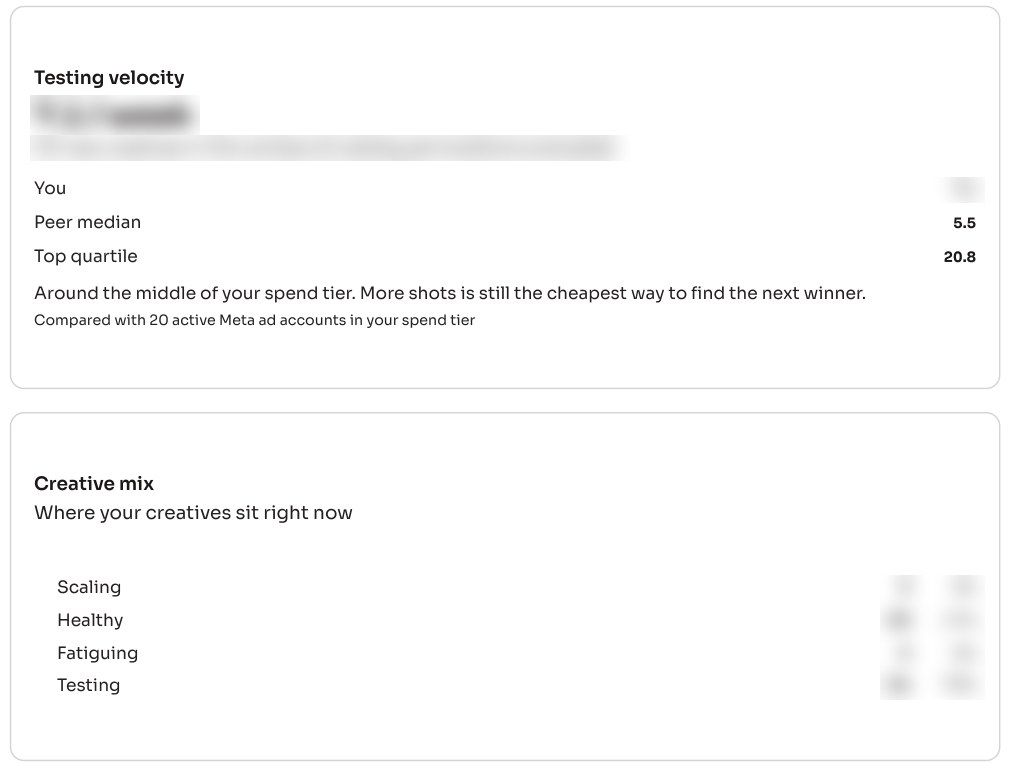
Pick one number before you launch, and judge every ad against it. A simple rule is spend of about 2x your target cost per purchase. If an ad spends that and gets no purchases, you've learned something. If it spent a quarter of that, you've learned nothing.
Some teams use an impression floor instead. One agency asked Drew for every ad that "hasn't had 15,000 impressions, so we can relaunch it." That works too, as long as it's written down and the same for every ad.
What doesn't work is judging new ads on ROAS from two or three purchases. At that volume, an ROAS of 0.3 vs 1.4 is often chance. Judge on spend reached and cost per purchase. Our guide on how long to test Facebook ads goes deeper on the bar.
Worked example: the fair-test math
Illustrative numbers, not a real store.
An ad set has a budget of 100 a day and six ads. Target cost per purchase is 25, so the fair-test bar is 50 per ad.
- If Meta split evenly: about 17 per ad per day. Each ad reaches 50 in about 3 days.
- What actually happens: the older ad takes 70 a day. The five new ads share 30, about 6 each. Each new ad needs over 8 days to reach 50.
- With three ads instead of six: the older ad takes 70, and two new ads share 30, so 15 each. Each reaches 50 in under 4 days.
Halving the number of ads more than halves the wait. That's why piling ten new ads into one ad set feels like "Meta won't spend." The budget was never big enough to test them all.
Does adding a new ad reset the learning phase?
It can. Meta's help page says an ad set needs about 50 optimisation events within 7 days of its last significant edit to leave the learning phase. It lists adding a new ad among the edits that can restart it (Meta: About the learning phase).
In practice, results vary. Some advertisers add ads and see no change. Others see costs jump for a few days. Either way, adding a new ad to your best-performing ad set carries some risk. That's one more reason to test new creative in a separate place first, and move only what works.
If your ad sets keep showing "Learning limited," the fix is usually fewer ad sets with more budget each. More ads won't help. See signal or noise for when a change is worth the reset.
Why does Advantage+ spend on one ad set and ignore another?
With Advantage+ campaign budget (formerly campaign budget optimisation), you set one budget for the campaign. Meta then moves it between ad sets toward the ones it expects to get the most results (Meta: About Advantage+ campaign budget).
So a new ad can starve for two reasons stacked on top of each other:
- Its ad set is losing the campaign split. The whole ad set gets little budget.
- Inside that ad set, an older ad takes most of what's left.
Before you blame the ad, check how much its ad set got. If the ad set got a sliver, no ad inside it ever had a chance. Compare spend across all ad sets in the campaign. The "not spending" ad set often isn't broken. It's just losing the internal split.
What should you do about new ads that won't spend?
Follow the path in the figure below. Each step takes a few minutes in Ads Manager.
1. Do nothing, if the ad set is hitting target
If the ad set is profitable and the older ad is still strong, Meta's choice may be right. Watch for fatigue in the older ad instead. The four levels of creative fatigue tell you when it's time for a new ad to take over.
2. Run a creative test
Meta's built-in creative testing forces a more even split between two to five test ads (some accounts now allow more) inside an existing ad set. It needs the Highest Volume bid strategy. Meta suggests putting no more than about 20% of the budget into the test, and tests seem to default to about 7 days (Meta: set up a creative test; Jon Loomer's walkthrough).
Two catches. You can't test a live ad directly, so you duplicate it into the test. And when the test ends, Meta stops forcing the split. The winner won't automatically get the budget.
3. Use a separate testing ad set
Keep one ad set (or campaign) whose only job is testing new creative. Run 3–4 ads in it, with enough budget per ad to reach your bar in about a week. Move only proven ads into your scaling ad sets. Our creative testing framework lays out the structure.
4. Move creative, not budget
When an ad has proven itself in one ad set but the ad set that needs it is starved, move the ad. Drew's advice to the agency:
- Duplicate the ad into the target ad set. Don't move the original.
- Let the copy deliver for about 3 days. Then switch off the source.
- If one ad takes over 60% of an ad set, add a second strong ad. It gives Meta another option when the leader tires.
- Give each creative one home in testing. Five copies of one ad in five ad sets just bid against each other.
This keeps changes small, which matters if you're trying to steady an account. For the bigger budget calls, see cut or feed.
Worked example: starved or losing?
Illustrative numbers, not a real store.
An ad set spends 200 a day. Target cost per purchase is 30, so the fair-test bar is 60. After five days:
| Ad | Spend | Purchases | Hook rate vs account average | Verdict |
|---|---|---|---|---|
| Older ad | 850 | 30 | Average | Keep |
| New ad A | 35 | 1 | Well above | Starved. Under the bar with a strong hook. Put it in a creative test |
| New ad B | 70 | 0 | Well below | Losing. Past the bar, weak hook. Meta was right. Let it go |
| New ad C | 45 | 0 | Average | Untested. Under the bar. Give it a few more days or test it |
Ad A and ad B both look like "Meta won't spend." Only one of them deserves more money. Hook rate is often the fastest early signal, because it needs impressions, not purchases.
Worked example: building a relaunch list
Illustrative numbers, not a real store.
An agency launched 40 ads last month and wants to know which deserve a second chance.
- 15 never delivered. Check why: 12 were in paused ad sets, 3 were rejected. Fix or archive.
- 12 were under the fair-test bar. Of these, 5 had a hook rate or click rate at or above the account average. That's the relaunch list.
- 13 reached the bar. Judge them on cost per purchase. Keep the winners, cut the rest.
Relaunch the 5 in a testing ad set, 3–4 at a time, not all at once into the scaling ad set. Exclude past purchasers if the goal is new customers.
What can you paste into Drew?
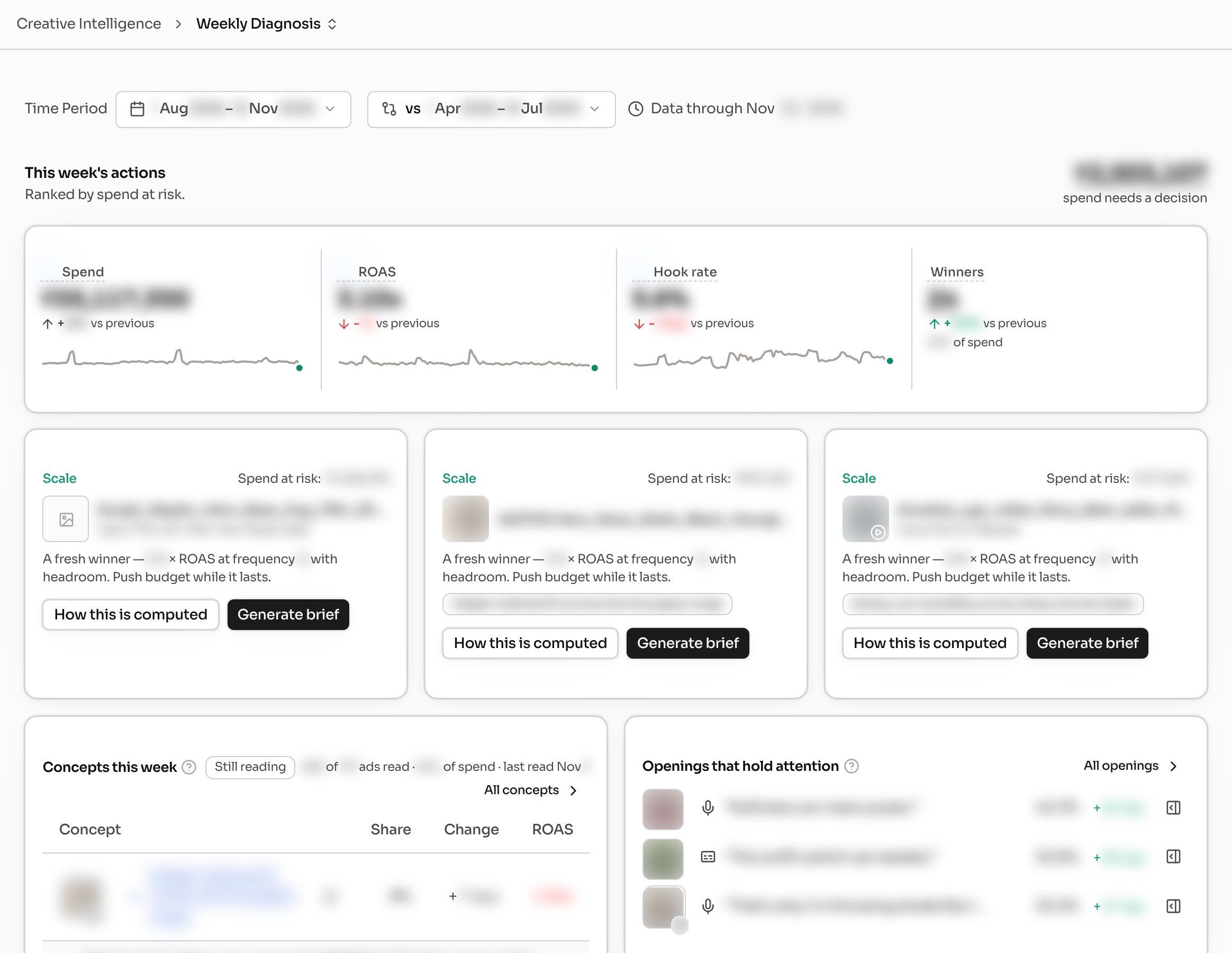
Drew reads your Meta account and Shopify store and tells you what it finds. You make the changes in Ads Manager. Copy this into Drew and change the dates and numbers:
"List every ad created in the last 30 days. For each one, show its status (and its ad set's and campaign's), spend, impressions, purchases, cost per purchase, hook rate, and its share of its ad set's spend. Use 2x my average cost per purchase as the fair-test bar. Group the ads into: never delivered (and why), under the bar, and tested. For ads under the bar, flag the ones with hook rate or click rate at or above the account average as relaunch candidates. Also list any creative running in more than one ad set, and any ad set where one ad takes more than 60% of spend."
The last two lines catch the problems that don't show up in a spend column.
FAQ
Why is Facebook not spending on my new ad when the old ones are running fine?
Meta backs the ad it expects to win, and older ads have history. Your new ad may be getting a small test slice. Check its share of the ad set's spend, and whether it has reached a fair-test bar before you judge it.
Should I pause the campaign if the new ads aren't spending?
Usually not. Pausing a working campaign resets what Meta has learned. If the older ads are still hitting target, leave them. Test the new ads in a separate testing ad set or a creative test.
How long should I wait for a new Meta ad to start spending?
New ads go through review first, which Meta says usually takes under 24 hours. After that, give it until it reaches your fair-test bar. With a small budget and many ads, that can take a week or more.
Can I force Meta to spend on a specific ad?
Not inside a normal ad set. A creative test forces a more even split for its duration. A separate ad set with its own budget also guarantees the ad gets money. Neither guarantees good results.
How many ads should I put in one ad set?
For testing, 3–4 is a good rule if your budget is small. Each ad needs enough spend to reach your bar within about a week. More ads mean a longer wait for every one of them.
Does adding new ads to an Advantage+ campaign hurt performance?
It can briefly. Adding an ad can restart the learning phase, and the new ad competes with proven ones for budget. Testing new ads elsewhere first, then moving the winners in, keeps the main campaign steady.